Common European Framework of Reference for Languages (CEFR)

ERK is the abbreviation of Europees Referentiekader, known in English as the Common European Framework of Reference (CEFR).
The CEFR describes what you must be able to do in a foreign language to demonstrate that you have mastered that language at a certain level.
The CEFR distinguishes six levels, which can be summarised in the following overview:
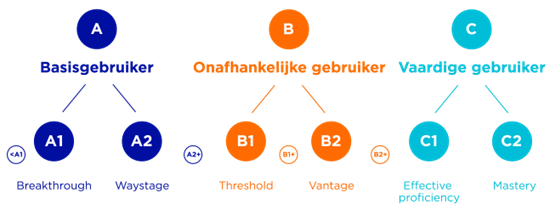
A1 is the lowest level, and C2 corresponds to the level of a near‑native speaker with an academic way of thinking. These levels can be used for all languages and have the same meaning in every country.
The CEFR distinguishes five language skills: reading, listening, spoken interaction, spoken production, and writing. These are also the skills assessed in the final exams for modern foreign languages.
The CEFR focuses on what you are able to do in the foreign language within each of these five skills. To determine this accurately, so‑called can‑do descriptors have been created for all levels. See here what you need to be able to do in order to master a level.
For more extensive information about the CEFR, visit the website of CEFR Netherlands.
Populaire cursussen


In deze workshop Portrettekenen maak je kennis met de technieken en vaardigheden die nodig zijn om een overtuigend en levendig portret te tekenen.
€ 75,00


Iedereen kan tekenen! Met plezier tekenen begint met goed kijken en bestuderen wat je ziet.
€ 315,00

De Collage Working Club (CWC) is een werkplek voor iedereen die wil ontdekken wat collage kan zijn.
€ 145,00

Communicatie, uitwisselen van informatie, het lijkt zo eenvoudig. Hoe komt het dan toch dat het soms anders loopt dan we bedoelen?
€ 131,50
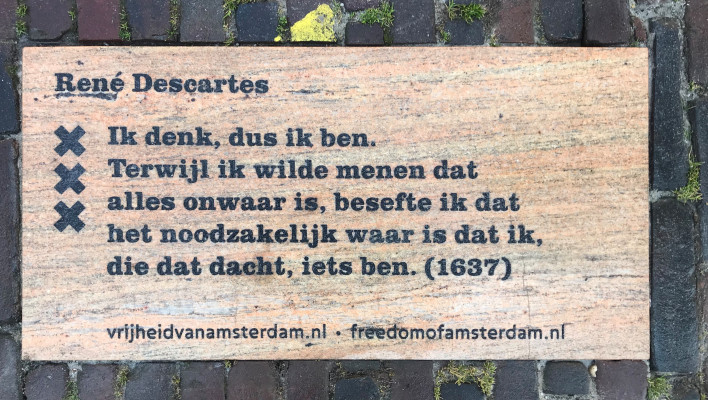
Wandel met een gids langs 6 filosofietegels in hartje Amsterdam met citaten van filosofen zoals Descartes, Hobbes en Spinoza.
€ 32,50


Je hoeft geen zangervaring te hebben – deze reis is voor iedereen met een nieuwsgierigheid naar de helende kracht van je eigen stem.